
It is the room people repaint most often, and the one they get wrong most often. Six months after the work, the bathroom paint blisters above the shower, and the kitchen keeps a greasy mark no cloth will remove. The problem is almost never the colour: it is the finish, and the prep.
Paint finishes, in one minute
The "finish" of a paint is how much it shines. The glossier a paint is, the more washable and watertight it is, but the more it reveals flaws in the wall. That is the whole trade-off.
- Matte — hides imperfections, barely washable. For ceilings and bedrooms, never for a damp room.
- Eggshell — the usual compromise for living rooms and bedrooms. Takes a light wipe, no more.
- Satin — washable, stands up to humidity. This is the bathroom and kitchen finish.
- Semi-gloss — very washable, shows every flaw. For trim, doors, frames and behind the stove.
- Gloss — almost only for furniture and high-contact surfaces.
The simple rule: the damper or dirtier the room, the glossier the finish should be.
Bathrooms: why paint blisters
A bathroom takes steam several times a day. If the paint is not watertight, moisture passes through, reaches the plaster, and comes back out lifting the film. Three causes, in order of frequency:
- A matte finish instead of satin. The most common cause, and the most avoidable.
- Poor ventilation. Repainting fixes nothing if the fan does not pull. It should run during the shower and twenty minutes after.
- Mould painted over. It comes back through within weeks. It has to be treated, not covered.
For a bathroom with no window, we add a moisture-blocking primer under the finish coat. The supplement is modest; it doubles the lifespan of the job.
Kitchens: the mark that will not go
Kitchen walls collect a thin film of airborne grease, even far from the stove. That film is invisible and it causes nearly every kitchen paint failure.
Paint applied over a greasy wall does not bond. It holds for a few months, then flakes at the corners and around the switches. That is why full degreasing always comes before painting, and why a professional clean before the work is not a decorative extra but the condition for the result.
Around the stove and behind the sink, go one step up to semi-gloss: these are the only surfaces in a home that actually get washed, several times a month.
Colours that hold up in a damp room
Very dark shades and deep reds always need a third coat to look even, and show hard-water marks more. In a small windowless bathroom, a light colour in a satin finish reflects light and makes marks far less visible.
If you are going from a dark colour to a pale one, plan for a blocking primer. Without it you will need three or four coats to cover, which costs more than the primer.
Repaint or clean? The test before you decide
Before committing to the work, do the damp cloth test: rub a discreet area for one minute with a mild degreaser. If the mark clearly lightens, a deep clean will be enough. If nothing moves, or the paint comes off with the stain, it needs repainting. We cover the full method in our dedicated article.
How long, and at what price
A standard bathroom: one day, drying included. A kitchen without the cabinets: one to two days, depending on the degreasing and the repairs. Budget $275 to $425 for the walls of one room, and $425 to $575 with the ceiling. Degreasing and hole repairs are added based on the actual condition of the surfaces.
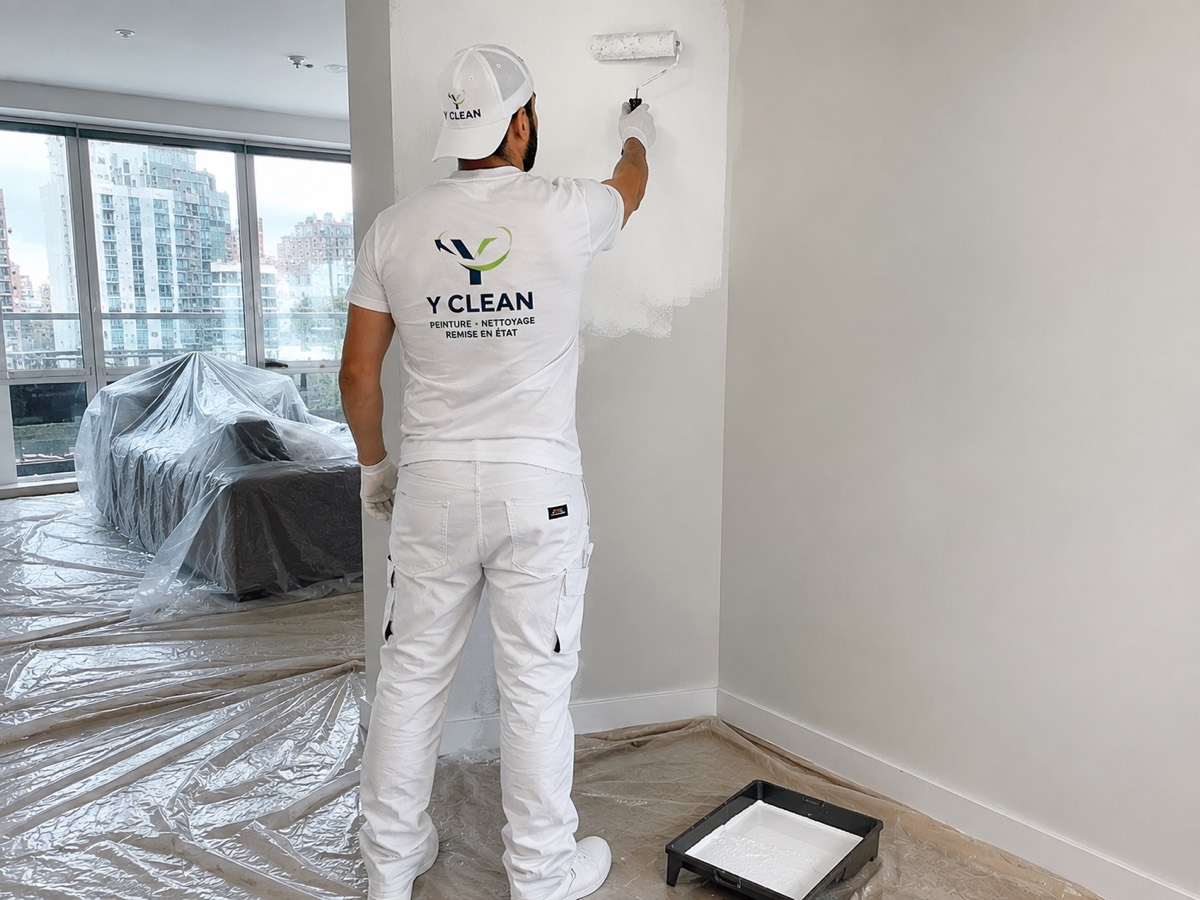
At Y CLEAN the painting is carried out by professional painters working with an RBQ-licensed contractor. Our own teams prepare the space beforehand and do the full cleaning afterwards. You get back a room that is ready to use, not a work site to clean.
Get your painting quote
Kitchen, bathroom or a whole unit. You get a flat rate, never an hourly rate.
Request my painting quoteOr call us at +1 438-770-2603